Exploring contemporary Australian types through commedia dell’arte
MELBOURNE, 2023

When?
Dates: Monday 13th November – Friday 1st December 2023
Where?
Mask Playing Studio
Coburg Uniting Church Hall
19 Victoria St, Coburg VIC 3058
Mask Making Atelier
Schoolhouse Studios
28 Victoria St, Coburg
Commedia dell’Arte, also known as Italian Comedy, is a milestone in the history of theatre. Historically, Commedia saw its glorious days between the 16th and 18th century, throughout Europe. A multitude of companies traveled performing shows (canovacci) based on improvisation, stock characters (types) with and without masks and a unique talent of physical performing, integrating text, pantomime, acrobatic, music, singing, in the rigorous folly of improvisation. Characters like Pantalone, Arlecchino, Zanni, Colombina, Il Capitano, the Lovers (Innamorati) and Pulcinella became heroes throughout Europe, and their theatre had profound influences on the coming generation of actors and playwrights. From Molière to Shakespeare, from melodrama to puppet theatre, from French pantomime to contemporary physical theatre, Commedia is at the roots of an actor-based creative theatre making.
After the second half of the 18th century, Commedia as a genre disappeared from theatres, replaced by a new wave of dramatic authors and script-based acting, including such styles as romantic theatre, melodrama, bourgeois drama, and naturalism. Commedia kept living in popular theatre and puppets (marionette e burattini), until the late 1800’s and early 1900’s when a new interest arose, led by a generation of theatre artists and researchers, attracted by the necessity of putting the actor and his theatrical body at the forefront of theatre. Among them was Jacques Copeau and Suzanne Bing who led the foundation of a lineage that includes Jean-Louis Barrault, Jean Dasté, Jacques Lecoq, and one of his earliest assistant, Carlo Mazzone-Clementi, who in the early 1960’s introduced Commedia dell’Arte in the United States.
The collaboration between Jacques Lecoq and the Italian sculpture Amleto Sartori, in Padova, led to the rebirth of the mask-making process and to the beginning of the return of half masks to modern theatre. Thanks to the work of these masters and their students, Commedia is now universally recognized as a milestone in the training of physical actors.
FROM TRADITIONAL ITALIAN COMMEDIA DELL’ARTE TO CONTEMPORARY HUMAN COMEDY
Masks belong to the world of archetypes and have been present in the history of humanity since the beginning. Essential elements of ancient theatre, they were the glorious protagonists in the Golden Age of Commedia dell’Arte in 16th and 17th century. Today, they represent a fundamental step in the training of the physical actor-creator.
Through covering the facial expressions of the actor, the mask allows them to go back to the roots of their own presence in space. Gestures are amplified and transposed, and everything is brought back to the body, thus giving the actor a complete new sense of space, presence and dramatic expression. The voice has to be masked too, in order to match the level of playing of the mask.

In the pedagogy of Jacques Lecoq, Commedia dell’arte holds a crucial position, informing the whole vision of devising theatre through improvisation, starting from very strong physically based characters, or, more in general, masks. His pedagogy of Commedia evolves on two tracks: Analysis of Movement and Improvisation. This combination gives students the physical awareness and the skills to explore the world of masks on stage. Mask play (le jeu masqué) combines strong emotional awareness and a powerful body alertness, with a rigorous technique of articulation of the body into dramatic attitudes.
During his pedagogic research at it school in Paris, Jacques Lecoq realized that the traditional Italian Comedy could fall into the trap of becoming a comedy of cliches and stereotypes, a sort of shallow re-enactment of a lost historical style. He started to ask the students to make their own half-mask, to liberate the play from the narrow limits of the traditional types. Human Comedy was born (La Comedie Humaine), and the exploration of contemporary types. You can find more about this evolution reading this article.
Half masks introduce the actor to a precise physical definition of a character. They are very defined forms in which the main dynamics of the characters appear, as well as their opposite aspects, the so called counter-mask. In Commedia, the actor is faced not only with the mask as a character, but also with a high level of play, brought by the depth of human archetypes. These masks play in a world of survival, where passions, urgencies and human behaviour are pushed to a permanent extreme. Half masks have a specific tragic depth and can bring the actor to a very high level of poetic transposition, where laughter and crying are intertwined.
Improvisation skills, and a kind of play based on the constant unfolding of a comic theme, train the actor both to enjoy very physical and rhythmical play and to develop a sense of playwriting and dramatic crescendo.
This incredibly vital style teaches the actor to truly experience what improvisation means, and how theatre can represent the wonderful madness of human beings, in a jubilation of rigorous fun. The play of half -masks is a celebration of the true art of the performer: deeply embodied characters playing all’improvviso in the virtuous development of comic themes (lazzi) makes half masks an amazing training ground for contemporary physical comedy.


THE PROGRAM OF THE WORKSHOP
The training will explore the foundation of half mask comedy through the study of the principles of traditional Commedia dell’Arte and their types and through an exploration of their contemporary manifestations in Australian culture and society as well as the development of new types.
Classes include:
- The Body in the Theatrical Space: Movement Analysis and Movement Technique.
- The dramatic urgencies of Commedia dell’Arte: animal states, human passions, emotional drives and social roles.
- The play of the half- mask: from the dynamic of the mask to the dramatic drives of the types.
- The body of the type: traditional and contemporary types.
- Voice Technique: the voice of the half-mask.
- Improvisation.
- Rhythm: lazzi and “botta e risposta”.
- Devising in Commedia and the creation of a Canovaccio (scenario).
- Devising of scenes and canovacci
- Public performance

In Parallel with the theatre training, participants will attend an ongoing atelier of MASK-MAKING, led by Beth Twentyman. The program of this work includes
- The Body in the Theatrical Space: the movement of forms
- Patterns, types, archetypes in contemporary Australia: the mimodynamic of human landscapes
- From movement patterns to forms: from dramatic urgencies of a types to the dynamics of the matter
- Design and construction of a half-mask: from the form in clay to the negative in plaster to the final mask in papier-maché.
- Putting the half masks to play
During this training participants will use:
– Commedia dell’Arte Leather Masks by Stefano Perocco di Meduna
– Half Masks by Beth Twentyman
– Half Masks by David Poznanter
– Half Masks made by the Participants
PRACTICALITIES
SCHEDULE
Classes will take place each day according to the following schedule.
WEEK 1 and 2
– Theatre classes: 9:30 to 13:00 and 14:00 to 15:00
-Mask Making Atelier: 15:30 to 18:00. The atelier will be accessible any time during the first two weeks, including on weekend
WEEK 3
Theatre classes: 9:30 to 13:00 and 14:00 to 17:30
Please note that the workshop is a learning continuum, so it is not possible to attend the class only in parts, or to miss any session of the work.
There is no application form. To apply to the workshop, please email a letter of motivation to giovanni.fusetti@helikos.com. In your letter please share the essence of your story, vision, dream, desire, fear or inexplicable intuition that leads you to this workshop. Please include in your letter your experience with movement-based theatre and in particular with Commedia.
Giovanni will contact you after receiving the application.
Giovanni will choose students from the applications received.
TUITION
Early Bird Registration: AUS $ 2.400
(Full tuition is due by September 1st, 2023.)
Full Price: AUS $ 2.800.
(If you pay after September 1st, 2023)
For those interested in applying to more than two workshops of the series, there is a reduction of 10% on the cumulative tuition. Please contact us for further details.
A limited number of ‘reduced tuition scholarships’ are available for this course. It is up to you to identify if you think you are in need of a reduced price. If you are interested in taking advantage of this please outline it in your letter of motivation.
The tuition includes the cost of the material used in the mask making process.
Please note that tuition does not include accommodation and that participants will be responsible for organizing their staying in Melbourne.
The class will be confirmed as soon as it reaches 8 participants. Once 16 participants will be confirmed, the workshop is full and a waiting list will be created.
If you intend to participate, we encourage you to apply as soon as possible!
Once accepted, you will need to confirm your enrollment with a deposit of 800 AUD.
Please note that the deposit is non-refundable.
Before the beginning of the workshop the participants will receive a message outlining all practical details about the workshop.
LANGUAGE
The workshop will be taught in ENGLISH and a basic understanding of this language is required.
For APPLICATIONS and for further information about the content of the workshop
please contact Giovanni Fusetti at
For enrollment and practical enquiries please contact
KIMBERLEY TWINER
ktwiner@gmail.com
Tel: 04 68664466
- Particpants are required to arrive on time, the space will be open 1/2 an hour before the start time for arrival and warm up
- There will be a lunch break, morning tea and afternoon tea each day (tea and coffee will be provided)
- Bring your own lunch (microwave and fridge available)
- Participants are required to attend whole workshop, it is not possible to attend only one day
- Participants need to wear black clothing that they can move around in freely.
- Masks provided by Beth with antibacterial wipes
FacilitatorS

Giovanni Fusetti
ARTist, Natural Scientist & Pedagogue
Giovanni brief bio….
http://www.giovannifusetti.com
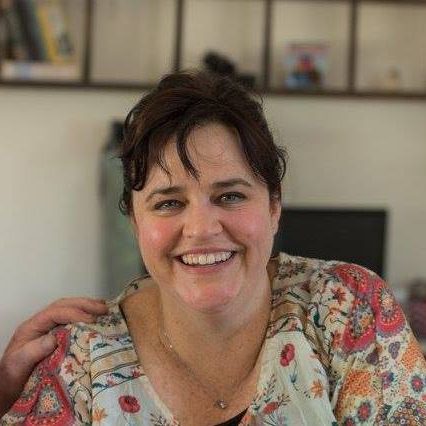
Beth Twentyman
Mask-maker & Facilitator
Beth is a mask maker, teacher and performance artist who is from Melbourne, Australia. She has a bachelor’s degree in Performance Studies, Masters in Speech Pathology and has studied theatre creation at Helikos International Theatre school in Italy in 2013 and 2016.
Most recently she completed 3 months pedagogical training to hone her skills in facilitating workshops and theatre classes.
 Melbourne Masks & Theatre